ChatGPT alternatives: Choose the right tool for your job

In this article
You don't need to find an AI assistant that wins every contest. You need one that handles the work you repeat: replying without sounding unlike yourself, checking a claim, keeping a document local, or helping colleagues follow the same rules. The useful way to compare chatgpt alternatives is to measure the effort between the first answer and the result you'd actually use.
Which job should your alternative do?
Say a Minneapolis ceramics shop sells $48 mugs and gets 25 customer messages a day. Its owner needs replies about late deliveries, not a demonstration of advanced math. A consultant reviewing a proposed city ordinance has a different problem: a persuasive answer is useless if its sources don't support it.
Your shortlist should reflect that difference. A job statement helps: “Draft a delivery reply in my voice without promising a refund,” or “Explain this ordinance using the official text and flag unresolved questions.” With the input, expected output, and a failure you won't accept, you'll have a testable requirement instead of “better AI.”
Chat.me fits the communication job. It's an AI chat assistant that drafts emails and messages in your voice from writing samples you choose to share. It also summarizes email threads, chats, and meeting transcripts into decisions and action items, showing which messages support a summary. Currently in private beta, it doesn't use customer conversations to train models by default. Those features make it a candidate for recurring communication, not a claim that it should replace a research tool or run locally.
For a broader starting list, Wikipedia's undated List of chatbots includes Claude, Gemini, Microsoft Copilot, and Perplexity. These are names to investigate, not an ordered recommendation. Their inclusion doesn't establish which plan or mode meets your needs. A cloud chat app, a search-oriented assistant, and software for running a local model belong in different comparisons.
Choosing one primary job before trying products keeps the comparison relevant. Otherwise, an impressive answer to a task you rarely do can distract you from poor performance on the work that fills your inbox.
A scorecard for chatgpt alternatives
A leaderboard can't tell you whether an assistant will invent a delivery promise. Benchmarks can help identify candidates, but they don't reproduce your documents, approval rules, or tolerance for rewriting.
Zheng et al. (2023), in Judging LLM-as-a-Judge with MT-Bench and Chatbot Arena, reported over 80% agreement between strong model judges and human preferences in their evaluations. They also examined position, verbosity, and self-enhancement biases. That's evidence that automated judging can be useful, with conditions; it isn't a reason to let another chatbot make your purchasing decision.
Pass/fail gates come first. If customer data must stay on an approved system, an unapproved tool is out. If colleagues must have separate accounts, a shared login fails. A high writing score shouldn't compensate for a broken privacy requirement.
You can then score the surviving options for one job using these proposed weights. This is a practical buying rubric, not a validated benchmark.
| Criterion | Weight | What you measure |
|---|---|---|
| Task fit | 40 | Does the output meet your instructions and job-specific needs? |
| Trust | 25 | Are facts supported, uncertainties stated, and commitments preserved? |
| Repair effort | 20 | How little work remains after the first answer? |
| Total cost | 15 | How affordable is the plan plus setup and recurring labor? |
A 0–5 rating gives each criterion the same scale, where higher is better. Zero means unusable; 1 or 2 means major problems; 3 means workable with substantial correction; 4 means minor correction; and 5 means it meets the criterion without correction. Review still matters even when you give a 5.
For effort, timing your repairs is more reliable than guessing from how polished the answer looks. For cost, the comparison needs the same expected monthly workload. Your calculation uses the average rating for each criterion across the same test cases. Any acceptable time or budget limits belong in the rubric before you see results.
Weighted score = sum of each weight × its rating ÷ 5. A hypothetical candidate rated 4, 3, 4, and 2 earns (40 × 4 + 25 × 3 + 20 × 4 + 15 × 2) ÷ 5 = 69/100. The weights total 100. These are example ratings, not results for any named product.
If research dominates your week, you might move weight from task fit to trust before testing. Changing weights afterward to favor the answer you liked would weaken the comparison. Separate jobs deserve separate scorecards; a good email draft doesn't cancel an unsupported research claim.

Writing in your voice means fewer corrections
A customer asks, “Can you guarantee this arrives by Friday?” The draft sounds friendly and includes your usual sign-off, but says yes when your shipping policy doesn't. It has copied your style while changing your position. That's a failed reply.
Voice matching needs a narrower test than “make this professional.” Each candidate needs the same short set of writing samples you've approved for sharing. A firm response belongs alongside a friendly one, because a single cheerful example won't show how you handle disagreement.
A test prompt could read: “Draft a reply under 90 words. Use the attached samples for sentence length and level of formality. Don't guarantee arrival or offer compensation. If the policy doesn't answer the question, leave that point unresolved.” Our guide to writing useful ChatGPT prompts explains how clear constraints make outputs easier to assess.
Unauthorized promises deserve attention before tone. Once you've checked those, you can mark the phrases you'd remove: an apology you wouldn't make, an elaborate greeting, or a closing that sounds like a press release. Those edits explain why one candidate needs less repair than another.
The second turn matters too. You can request a firmer version without changing the facts. If it introduces a refund while adjusting tone, it hasn't kept your constraints. A communication assistant should preserve decisions through revisions, because your real work rarely ends with the first draft.
Personalization doesn't require permission to share everything. A few approved examples may be enough for a useful test. You're evaluating whether the tool preserves your intent, not how much of your inbox it can ingest.
Research needs citations you can inspect
A consultant asks for evidence that a proposed packaging rule will affect a client's product. The assistant supplies a confident summary and several links. One link describes a different jurisdiction; another supports the general topic but not the claimed deadline.
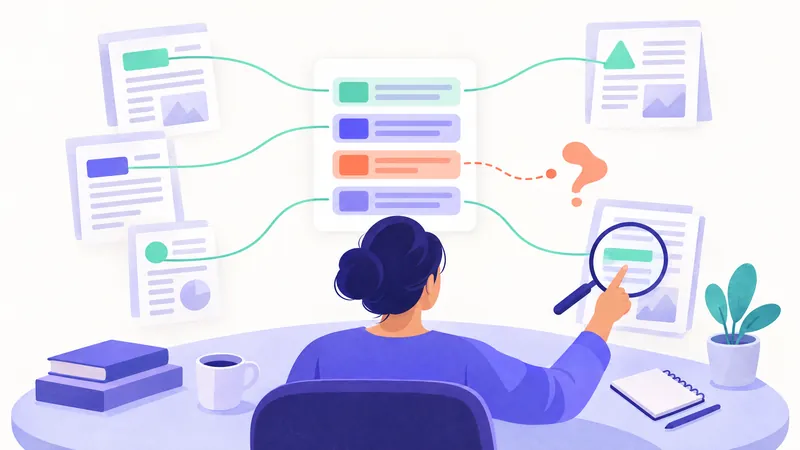
The presence of citations doesn't settle the question. Gao et al. (2023), in Enabling Large Language Models to Generate Text with Citations, reported that even the best models in their experiments lacked complete citation support 50% of the time on the ELI5 dataset. That figure describes their tested systems and dataset, not a current failure rate for every assistant.
The buying test follows from the distinction: can you verify the answer claim by claim? Candidates need the same question with a jurisdiction and a date, with instructions to separate what the sources establish from what they infer. For document-based work, the source packet should match; for web research, you can test whether they find the appropriate official sources themselves.
For each material claim, verification means opening its citation and locating the supporting passage. The passage needs to support the exact statement, including its scope and date. A source that loads but contradicts the answer earns no credit for that claim.
Citation coverage matters as well: did the assistant leave an important statement unsupported? An answer can cite one sentence correctly while inventing the next. Your trust rating should reflect both support and coverage, rather than the number of links.
A question your source packet can't answer tests another useful behavior. An assistant that admits the gap gives you a useful stopping point. One that fills it with plausible detail creates work you may not notice. The guide to AI hallucinations and verification covers that failure pattern.
A shorter answer with traceable evidence can be the better research result. You'll spend less time separating established facts from confident guesses.
Private and local models solve different problems
A draft acquisition memo can't leave a company's managed laptop. A cloud tool's promise about training doesn't answer that requirement: the document may still be sent elsewhere for processing. “Not used for training” and “never leaves this device” describe different arrangements.
David Liebovitz's undated Northwestern University guide to local AI explains a setup using Ollama to run language models and AnythingLLM as a chat interface. It also warns about storage demands and recommends smaller models when memory is insufficient. The practical comparison is the complete local setup on your actual computer, not a model name alone.
Local inference means the model produces its answer on your device. It doesn't automatically mean every surrounding feature stays local. A remote document processor, cloud model connection, or synced chat folder can change the data path.
For cloud candidates, NIST's Generative Artificial Intelligence Profile (2024) identifies privacy risks from leakage and unauthorized use or disclosure of sensitive data. Its suggested action MP-4.1-005 calls for policies covering data collection and retention. That supports asking specific questions about storage and deletion, rather than accepting a broad privacy label.
Your review should establish where prompts and uploads go, who can access them, how long they're retained, and what deletion covers. Subprocessors and backups belong in that review. Chat.me's default against training on customer conversations answers one part of this review; our privacy and data-handling page is the relevant place to examine the wider policy.
Synthetic documents make a safer local trial until your IT reviewer approves the configuration. You can test whether the selected model and document processing work with network access disabled, then inspect logs and backup settings. An offline test is evidence about that workflow, not proof of complete security.
Response time needs measuring on the laptop you'll use. A model that handles short replies may struggle with your long memo. If local processing is mandatory, that limitation belongs in your repair-effort score; it doesn't justify moving sensitive work to an unapproved cloud service.
Team use depends on the handoff
Say a Denver agency has six account managers handling client requests. One person updates the approved cancellation reply, but another keeps using a saved prompt with the old policy. Everyone has access to AI; the team still sends inconsistent answers.
Team selection needs an end-to-end test. Two colleagues can try the same scenario, using separate accounts and the shared guidance available to each. A second run after changing a rule reveals whether shared instructions reach the actual drafting workflow.
Permissions are a gate, not a style preference. Can a colleague without access to a client document retrieve it through chat? Harmless test documents with distinct marker phrases let you check. A response that reveals a restricted marker fails the access requirement, regardless of its score elsewhere.
The next test traces a handoff: who drafted the reply, who approved it, and which source messages supported the summary? Chat.me lets teams share tone guidelines and reply templates. Those can address inconsistent communication, but they're not a substitute for evaluating the access and approval controls your organization requires.
Offboarding deserves a place in the trial. Your administrator should be able to demonstrate what happens to a departing colleague's access and shared material. If a required control is unavailable or unclear, the candidate hasn't passed that gate.
Consumer subscriptions and team plans aren't interchangeable, so your notes need the exact plan being evaluated. The useful unit of cost is the working team setup, including administration and review, because an inexpensive individual account may leave colleagues doing extra coordination by hand.
Your winner should beat your current workflow
A strong demo can hide a weak daily fit. By the fifth revision, the assistant may have forgotten a constraint, and you've spent longer correcting it than writing the reply yourself.
A manageable pilot uses six representative cases for your primary job, repeated twice on each candidate. A routine case belongs alongside an awkward exception. ChatGPT provides a baseline, and your current manual process supplies another comparison. This small test won't establish statistical superiority; it can expose repeated problems before you commit.
Every system needs the same inputs, with its plan, model or mode, settings, and test date recorded. Hiding product names while reviewing outputs can reduce favoritism. Separate scores for first drafts and completed work let you see whether a candidate's apparent quality survives the cost of repair.
A short failure note beside each rating makes the result usable: “changed deadline,” “citation didn't support claim,” or “needed copied team guidance.” You'll know what to retest after an update.
If the alternative doesn't reduce repair work or meet a requirement your current setup misses, there's no reason to switch. Your next step is one approved real task with a clear success condition: a reply that keeps your position, a research answer you can verify, or a document that stays where it belongs.
Frequently asked questions
What is the best alternative to ChatGPT?
The best alternative depends on your main task and data restrictions. For writing, compare how much editing each assistant needs to sound like you. For research, check whether citations support individual claims. For private work, evaluate local processing and the full data path. For teams, test permissions and shared guidance. Keep ChatGPT as a baseline so you can see whether switching actually helps.
Are free ChatGPT alternatives good enough for work?
A free option can be sufficient for occasional, low-risk tasks if it passes your own tests. Compare output quality and repair time, then check usage limits, data terms, and access to needed features. A free local setup also has hardware and maintenance costs. Don't put sensitive business data into an unapproved service just because it doesn't charge a subscription fee.
Can I use an AI assistant without sending data to the cloud?
Yes, you can run a supported language model locally with a suitable computer and local software. The model, document processing, and storage must all stay on your device for a fully local workflow. Cloud connectors or remote models can change that arrangement. Check logs, backups, and network settings too. Local processing gives you control over deployment, but it doesn't guarantee security or factual accuracy.
How do I compare AI assistants fairly?
Give each assistant the same inputs, instructions, and relevant writing samples. Record the model or mode, plan, and test date. Rate task fit, evidence quality, repair effort, and total cost with weights chosen before seeing the answers. Repeat the same cases and hide product names during review where possible. Treat privacy and permission requirements as pass/fail checks rather than points a polished answer can offset.
Sources
- List of chatbots, Wikipedia
- Judging LLM-as-a-Judge with MT-Bench and Chatbot Arena, arXiv (2023)
- Enabling Large Language Models to Generate Text with Citations, Association for Computational Linguistics (2023)
- Getting Started: A Novice-Friendly Guide to Running Local AI With Ollama and AnythingLLM, Northwestern University Feinberg School of Medicine
- Artificial Intelligence Risk Management Framework: Generative Artificial Intelligence Profile, National Institute of Standards and Technology (2024)
Keep reading

How to get AI meeting notes people actually use
Turn meeting transcripts into a trusted working record, with clear recording consent, checked commitments, and follow-ups that reach the right people.

Using AI customer service without hurting customer experience
A practical guide to AI-assisted support: route requests by risk, review draft replies, preserve human handoffs, and measure whether customers need to come back.

What is a large language model? A marketer's guide
Understand tokens, training, transformers, fine-tuning, and human feedback, then use that knowledge to write clearer prompts and review AI copy with evidence.